Guides
At-home STI testing: what to know before you start
Understand the difference between a self-test and collecting a sample for a laboratory.
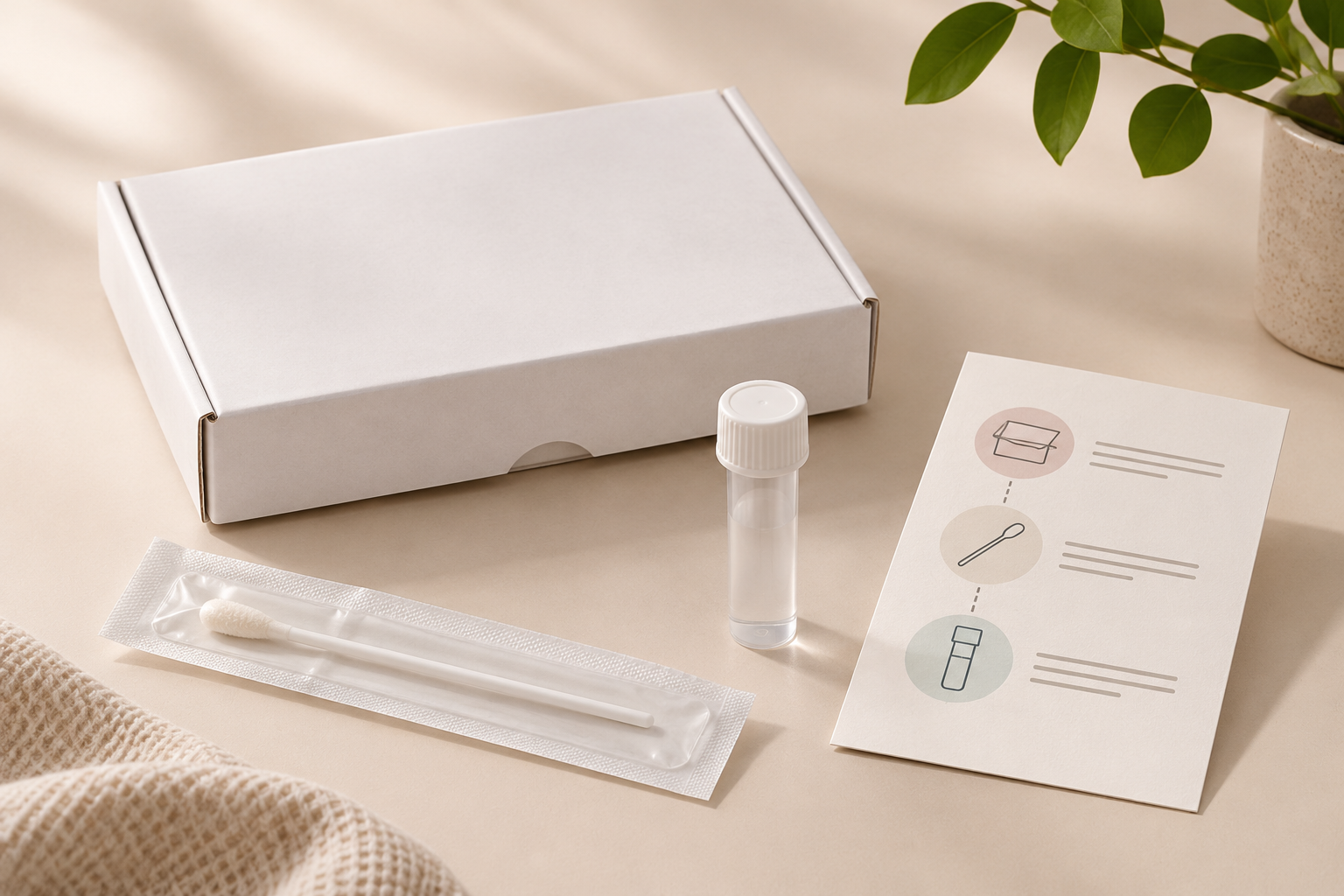
What does at-home testing mean?A self-test is completed and read by the user. A self-collection kit lets you collect a sample and send it to a laboratory. Instructions, samples, available infections and local rules vary by test and location.Check who performs the laboratory analysis, how results are delivered, and what support is available. A kit does not necessarily test for every sexually transmitted infection. Ask a clinician which tests are right for your exposure and when to take them.After your resultFollow the instructions for an invalid result. A positive result may need additional testing and clinical care; a negative result may not rule out an infection acquired too recently. Do not delay care if you have symptoms.Sources: CDC, Getting Tested for STIs and FDA, Home Test Authorization.
A note about testing
At-home tests differ in their sample, detection window and laboratory requirements. A negative result may not rule out an infection. Speak with a qualified healthcare professional.
Discussion